

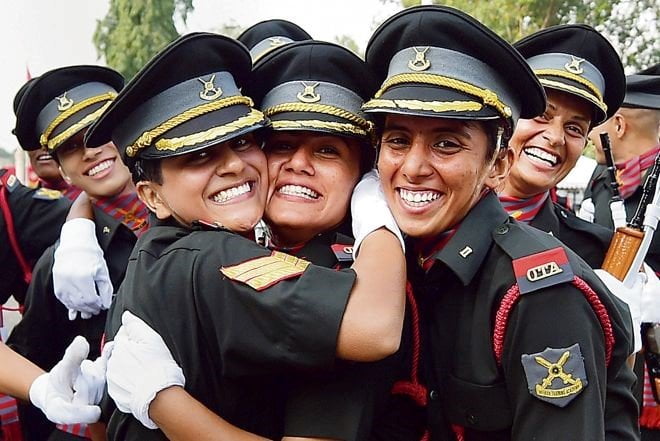
Across the world, women in uniform continue to navigate a complex intersection of constitutional guarantees, international commitments, biological realities, operational requirements, and deeply entrenched social expectations. While equality before law is formally assured, lived institutional realities often reflect under-representation, structural exclusion, career penalties linked to motherhood, and disproportionate domestic responsibilities. Simultaneously, legitimate concerns regarding combat readiness, unit cohesion, and the misuse of gender-based protections demand sober, evidence-driven policy responses.
This article presents a comprehensive analysis of women’s participation in uniformed services. Drawing upon international frameworks, comparative practices of global armed forces, the evolving character of warfare, civil governance and child-care policies, and landmark apex court judgments particularly in India , it argues that fairness, not sameness, is the constitutional and operational foundation of equality. The article further proposes balanced institutional mechanisms that protect genuine rights while firmly curbing misuse, concluding that mature armed forces are strengthened not weakened by principled gender inclusion.
Equality Beyond Rhetoric

Equality is often invoked as a moral slogan absolute, indivisible, and emotionally appealing. Yet in institutions tasked with the defence of the nation, equality cannot be rhetorical. It must be functional, evidence-based, and grounded in operational reality. Armed forces exist not to perform social experiments but to prevail in war, maintain deterrence, and protect national sovereignty. Any policy affecting force composition must therefore withstand the dual tests of constitutional legitimacy and military effectiveness.
Women in uniform face a dual burden that their male counterparts rarely confront. Professionally, they must repeatedly prove competence in environments historically designed by and for men. Socially, they are expected to sustain families, nurture children, and absorb emotional labour without institutional accommodation. This duality is not anecdotal; it is structural and globally documented.
Acknowledging this reality is frequently misinterpreted as seeking privilege. In truth, it is a demand for substantive equality an equality that accounts for starting disadvantages, social context, and biological facts. Denying difference does not create fairness; it entrenches hidden discrimination.
International Normative Frameworks: Global Recognition of Gendered Realities

United Nations Women, Peace and Security (WPS) Agenda
The adoption of United Nations Security Council Resolution 1325 (2000) marked a paradigm shift in global security thinking. For the first time, the international community formally acknowledged that women are not merely victims of conflict but indispensable agents of peace and security. Subsequent resolutions expanded this framework, emphasizing women’s participation at all decision-making levels in conflict prevention, peacekeeping, and post-conflict reconstruction.
The WPS agenda rests on four pillars:
- Participation: Inclusion of women in security institutions and peace processes
- Protection: Safeguarding women from violence in conflict
- Prevention: Gender-sensitive conflict prevention
- Relief and Recovery: Inclusive post-conflict reconstruction

Crucially, WPS is not symbolic. It is grounded in empirical evidence that women’s participation improves intelligence gathering, enhances civilian trust, reduces sexual violence, and contributes to durable peace. Modern militaries that ignore this agenda do so at operational cost.
Global Economic and Labour Institutions
The International Labour Organization estimates that over 700 million women globally are excluded from the workforce due to unpaid care responsibilities. Women perform nearly three times more unpaid domestic and caregiving labour than men. The World Economic Forum repeatedly highlights that gender gaps in workforce participation and leadership impose massive economic losses on nations.
For uniformed services, this translates into:
- Reduced recruitment pools
- Higher attrition among trained women
- Loss of institutional investment
Demanding “absolute equality” without addressing these structural facts is not neutrality it is institutional indifference.
Comparative Military Practices: What Other Armies Have Learned

United States Armed Forces
The United States formally lifted the ban on women in direct ground combat roles in 2013, with full role access by 2016. The transition was deliberate and data-driven. Policies emphasized:
- Role-specific physical standards
- Pilot integration programs
- Continuous monitoring of injuries, cohesion, and retention

While women remain under-represented in infantry and special operations, the feared collapse of standards did not occur. Instead, the U.S. experience demonstrated that standards can be preserved while access is expanded, provided leadership commitment exists.
United Kingdom Armed Forces

The United Kingdom opened all combat roles to women in 2018. British reforms stressed that suitability must be determined by task-specific capability, not gender identity. Importantly, the UK invested in leadership training to manage cultural resistance a lesson many militaries underestimate.
Israel: Conscription and National Security Imperatives

Israel’s conscription-based model integrates women widely, including in select combat roles. However, even Israel retains exclusions for certain elite units, acknowledging that operational demands differ. This demonstrates a crucial truth: no professional military treats equality as absolute sameness.
Comparative Lessons
Across militaries, three consistent findings emerge:
- Integration is gradual and requires sustained leadership backing
- Representation improves when family-support policies exist
- Operational effectiveness is preserved through role-based standards
Changing Character of Warfare

From Physical Attrition to Multi-Domain Conflict
Twenty-first century warfare is no longer defined solely by physical endurance. Modern conflicts involve:
- Counter-insurgency and hybrid warfare
- Urban combat
- Cyber, space, and information domains
- Peacekeeping and stabilization operations
In these environments, cognitive ability, adaptability, cultural intelligence, and technological proficiency are decisive.
Gender as an Operational Multiplier
Women personnel have demonstrated particular effectiveness in:
- Human intelligence collection
- Civil-military engagement
- Accessing local women and children in conservative societies
- Investigating sexual and gender-based violence
Thus, inclusion is not charity it is capability enhancement.
Civil Governance, Child Policies, and Structural Inequality

Unpaid Care Work: The Invisible Constraint
Globally, women shoulder disproportionate caregiving responsibilities. For servicewomen, this manifests as:
- Career interruptions due to childbirth
- Limited deployment availability
- Slower promotion trajectories
Without institutional intervention, merit alone cannot overcome these structural barriers.
Maternity and Parenthood in Uniform
Progressive armed forces recognize that:
- Maternity is a biological reality, not a concession
- Parenthood must be institutionally supported
- Penalizing motherhood erodes force readiness
Policies such as on-base childcare, parental leave for both genders, and flexible postings are now strategic necessities, not welfare luxuries.
Indian Apex Court Jurisprudence: Equality Enforced

Permanent Commission and Constitutional Equality
Indian courts have repeatedly dismantled stereotypes that questioned women’s leadership, endurance, and suitability for command. Landmark judgments recognized women officers’ right to Permanent Commission, rejecting arguments rooted in tradition rather than evidence.
Nitisha v. Union of India (2024)
In Nitisha, the Supreme Court reaffirmed that long service under Short Service Commission could not be discounted due to historical policy discrimination. The Court emphasized substantive equality, holding that equal opportunity must account for past exclusion.
Supreme Court Clarifications 2025
The Court reiterated that employment in the Armed Forces is constitutionally gender-neutral. Any exclusion must meet strict tests of proportionality, necessity, and evidence.
Misuse of Gender Protections: Addressing the Hard Truth

No rights framework is immune from misuse. False complaints, tactical allegations, or exploitation of medical and maternity provisions though limited do occur. Such misuse damages:
- Genuine victims
- Institutional trust
- Public confidence in gender justice
Acknowledging misuse is not misogyny; it is institutional responsibility.
Safeguards Against Misuse Without Diluting Protection

Effective systems combine compassion with accountability:
- Time-bound, impartial investigations
- Independent oversight mechanisms
- Evidence-based medical and administrative boards
- Sanctions for proven falsehoods
- Due process protections for all parties
Protection and discipline must coexist.
Policy Recommendations

Immediate Measures
- Publish clear gender integration and family policies
- Standardize role-based physical and medical criteria
- Establish independent grievance redress mechanisms
Medium-Term Measures
- Expand childcare infrastructure
- Normalize parental leave for men and women
- Integrate gender metrics into command evaluations
Long-Term Measures
- Statutory oversight bodies
- Longitudinal research on integration outcomes
- Transparent public reporting of anonymized data
Leadership, Culture, and Institutional Ethos

Policies succeed only when leaders own them. Commanders must actively reject stereotypes, enforce discipline, and foster professional respect. Cultural reform is not dilution of military ethos it is its evolution.
Conclusion: Fairness as Institutional Strength

A modern armed force is judged not only by its weapon systems but by its moral and institutional maturity. Recognizing women’s realities, enforcing fair standards, supporting families, and punishing misuse are not acts of concession they are measures of strength.
Equality does not demand denial of difference. It demands fairness grounded in reality.
When women in uniform are protected, trusted, and respected, institutions do not weaken they endure and prevail.


Sacrifices of duty bound armed forces lady officers first to the nation, enduring the challenges and odds of the family, the theme of resilience and tolerance towards equality in service so well compiled.
Nowadays favouritism has become tha law majority resulted in degradation of this elite Force. Professionalism been replaced with YES bent of mind people
The so called concessions given to women in the armed forces are a biological, social and cultural necessity and must be viewed as such and not as concessions. Women are far more comitted to all walks of life vis a vis the average male counterpart who is traditionally focussed only on his career.
Very informative and educative
A very well researched article listing out the ground realities of a woman soldier in the Indian Forces. A must for all policy makers not only those at helm of affairs in the Forces but also policy makers in the Defence Ministry.
Good read..Excellent ..Well articulated .Stakeholders must see this . Thank you for bringing out the reality and the constitutional spirit.
The author has rightly expressed that inclusion is not charity but capability development. It’s a shame that certain rights are being denied to the women officers of the Indian Army solely because of their gender and profession. Denial of Ex-servicemen status for the MNS officers is a case in point.