


“Are politicians safe in Pakistan?” – a good question, but without a straightforward answer in a country where so many politicians – presidents, prime ministers and even dictators, from Liaquat Ali Khan to Zulfikar Ali Bhutto, his daughter Benazir, Nawaz Sharif, Pervez Musharraf and now Imran Khan – have been jailed, hanged, driven into exile or made to disappear from public view.
Politics is a high-risk profession in Pakistan
Politics in Pakistan is dicey business, more of a gamble in which one’s life, liberty and livelihood are at stake. It is a profession where, sooner or later, you realise that power is a double-edged sword that does not always protect you. Politics is a high-risk occupation in which power offers visibility, protocol and privilege – but very little real protection. The country’s political history reads more like a long crime story in which elected leaders are the most vulnerable characters.
Though Pakistan is formally a parliamentary democracy, it is a system where a speech, a stance or a miscalculated challenge to the establishment can abruptly shift a politician from motorcades and cabinet meetings to courtrooms, lockups or one-way flights out of the country.

Even Choudhry Rahmat Ali, who coined the very name “Pakistan”, was expelled from the country in 1948 and died in lonely exile in Cambridge – a reminder that in Pakistan, not even founders are guaranteed a home, let alone safety. All his belongings were confiscated, his passport cancelled, and he was forced back to England, where he died “destitute, forlorn and lonely” in Cambridge in 1951, buried far from the homeland he had named.
For local politicians in conflict-hit regions, the dangers are even more immediate, with militants and insurgents adding another layer of threat. The cumulative effect is that politics in Pakistan is lived permanently on the edge, where every ascent carries the shadow of a potential fall – and where that fall is rarely gentle.
The country’s first prime minister, Liaquat Ali Khan, was assassinated at a public rally; Zulfikar Ali Bhutto was hanged; his daughter Benazir was dismissed from office twice and then gunned down at an election rally; Nawaz Sharif has swung repeatedly between prison cells and exile; and now Imran Khan sits in a high-security jail, his conditions shrouded in secrecy.
A democracy where no prime minister finishes the race

Since 1947, Pakistan has had more than 20 prime ministers. Not even one of them has completed a full five-year term in office. All have been removed early through coups, presidential dismissals, palace intrigues, court orders or no-confidence votes.
That pattern began in October 1951, when Pakistan’s first prime minister, Liaquat Ali Khan, was shot dead while addressing a public meeting in Rawalpindi. The assassin was killed on the spot, and the motive has never been established conclusively.
In 1977, Zulfikar Ali Bhutto, a popular, democratically elected prime minister, was overthrown in a coup orchestrated by General Zia-ul-Haq. Two years later he was hanged after being convicted in a politically driven murder case.

Significantly, it was Zulfikar Ali Bhutto who hand-picked General Zia-ul-Haq as army chief in 1976, superseding several seniors because he thought Zia was politically harmless, personally loyal and professionally dependent on him. Zia, for his part, cultivated the image of a soft-spoken, deeply religious officer who repeatedly called himself Bhutto’s obedient servant. Bhutto saw him as “his general”; Zia saw Bhutto as a stepping stone.
The Bhutto–Zia “equation” is one of the great tragic miscalculations of Pakistan’s history. Bhutto thought he was choosing the safest possible army chief in Zia-ul-Haq – a junior general he could control. In the end, that “safe” choice hanged him.
In March 2024, Pakistan’s Supreme Court finally acknowledged that Bhutto had not been given a fair trial and that the conditions of due process “were not met” – a belated confirmation of what his supporters had long called a “judicial murder”.

Bhutto’s daughter Benazir, twice elected prime minister in 1988 and 1993, inherited his legacy and his curse. She was not only dismissed twice before completing a term but was eventually assassinated – after spending years in exile – as she left an election rally at Rawalpindi’s Liaquat Bagh on 27 December 2007, the same ground where Liaquat had fallen 56 years earlier.
Similarly, thrice-elected prime minister Nawaz Sharif was ousted three times: first after a showdown with the presidency in the 1990s; then in a military coup by General Pervez Musharraf in 1999, followed by exile to Saudi Arabia; and finally in 2017, when the Supreme Court disqualified him for possessing undeclared income.
Pakistan’s first president, Iskander Mirza, who imposed martial law in 1958, was dethroned by his own army chief, Ayub Khan, and sent into exile. He died in London in 1969, struggling financially. The Pakistan government refused to allow his burial at home. Eventually the Shah of Iran sent a plane to bring his body to Tehran, where he was buried after a state funeral.
Lawfare and the new way to make politicians “disappear”

The era of coups and public hangings has now been supplemented by lawfare – the effective but subtle use of courts, anti-corruption laws and national security allegations to neutralise politicians who make the state uncomfortable.
The clearest current example is Imran Khan. Elevated to power in 2018 with at least tacit military backing, he was removed in 2022 by a parliamentary no-confidence vote. Since then, he has been overwhelmed by a barrage of cases. He has received multiple sentences, including a 14-year term in one corruption case, ensuring that he remains behind bars even as other convictions have been suspended or overturned.
Many of his trials have been held inside Adiala Jail on “security grounds”, away from open public scrutiny. Rights organisations and international media have noted that these in-camera proceedings, combined with the sheer number of overlapping cases, make it hard to distinguish legal accountability from political engineering.
According to his son Kasim, the former prime minister has been kept for weeks in solitary confinement in a “death cell” with “zero transparency”, denied phone calls and routine family visits despite court orders. His three sisters are publicly demanding “proof of life” and have complained that they have been barred from seeing him for over a month. Pakistani and Indian media report that their appeals have now become a full-blown international human-rights issue.
The pattern is disturbingly familiar. When prosecutions, closed-door trials and opaque prison regimes become the primary tools for managing opposition, a politician can “vanish” without ever leaving the country. His body may be in a known cell; his voice and visibility are what disappear.
Enforced disappearances and exile: politics by subtraction
Pakistan has an even darker habit: enforced disappearances. Journalists, students, activists, suspected militants – and sometimes relatives of opposition figures – have been picked up by security agencies and held incommunicado, often for years.
According to an Amnesty International report, Pakistan’s own Commission of Inquiry on Enforced Disappearances recorded 10,078 disappearances since 2011 – mainly from Khyber Pakhtunkhwa and Balochistan. In most of these cases, people were not officially detained but disappeared without being charged or convicted.
Another way in which politicians “disappear” is through forced or negotiated exile. A case in point is Nawaz Sharif’s Saudi deal after the 1999 coup. Iskander Mirza’s expulsion in 1958, followed by his lonely death in London, is another such example.
In some cases, lower-level politicians, journalists and activists opt for self-exile when the threats and “visits” from unknown men become intolerable. Technically they have not disappeared, and everyone knows they are in London, Dubai or Toronto. But for the ordinary Pakistani who once saw them on evening talk shows, they might as well have vanished into another universe.

Perhaps the most prominent current example of such an exiled politician is Altaf Hussain the leader of Mohajir Quami Movement (MQM) who has lived in self-exile in London since the early 1990s. From there, he controlled Karachi’s politics for decades via telephonic addresses, though his influence has waned significantly in recent years due to state crackdowns and a media ban in Pakistan.
The ruling Sharif family too has a history of exile. Nawaz Sharif lived in exile in Saudi Arabia (2000–2007) after General Musharraf’s coup, and later in London (2019–2023) for medical treatment while facing corruption charges. He returned in late 2023 to lead his party again. Shehbaz Sharif also spent years in exile in Saudi Arabia and London during the Musharraf era.
Pervez Musharraf – the former military dictator spent his final years in self-exile in Dubai to avoid treason charges in Pakistan. He died there in 2023.
Unlike many predecessors, former PM Imran Khan is currently incarcerated in Pakistan (Adiala Jail). He has publicly stated he refuses to go into exile, breaking the traditional pattern of Pakistani leaders leaving the country when facing legal/military pressure.
Militancy: the other sword hanging over politics

Even if there were no coups, no lawfare and no disappearances, Pakistani politicians would still operate in a lethal environment. Militant and insurgent violence has become a structural feature of the political landscape. Ironically, politicians are squeezed from both sides: militants dub them collaborators with a hostile state, while security agencies view the entire constituency as suspect.
The Pakistan Institute for Peace Studies (PIPS) recorded 645 terrorist attacks and counter-terror incidents in 2024, including 521 attacks claimed by militant or insurgent outfits, which killed 852 people and injured 1,092 – a sharp rise from the previous year, with over 95% of attacks concentrated in Khyber Pakhtunkhwa and Balochistan.
Many of these attacks targeted security forces, but election rallies, party offices and local politicians have repeatedly been caught in the crosshairs. Twin bombings on the eve of the February 2024 polls in Balochistan killed around 30 people outside political campaign offices; Islamic State – Pakistan Province later claimed responsibility.
In January 2024, a bomb ripped through a Pakistan Tehreek-e-Insaf rally in Sibi, Balochistan, killing four people and injuring five.
The real question Pakistan must answer
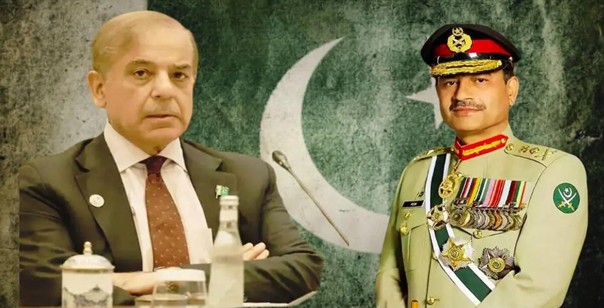
The long list of assassinations, hangings, coups, exiles, disappearances and imprisonments suggests this is not just a moral crisis but a structural one. When politicians fear that losing power may lead to prison, exile or worse, they spend more time looking over their shoulder at the barracks and the bench than looking their voters in the eye.
Until prime ministers can expect to sit on opposition benches instead of ending up in a grave; until courts stop meddling in politics and are seen as neutral arbiters of law; until disappearances end and militants are treated as enemies, not assets, Pakistani politicians will keep vanishing from public life in ways no self-respecting democracy should tolerate.